Log in to save this game to My Games.
Wargamer Game Studio has a wide range of miniature sets available for this game on their website
Facebook: By Fire and Sword Page
Facebook: By Fire and Sword Group
Webpage: By Fire and Sword Review by Goonhammer Historicals
Youtube: By Fire and Sword Academy Playlist (13 Videos) by Alexander Eckert
Youtube: By Fire and Sword Review by 7th Son
Wargamer Games Studio has a wide range of figures available on their website here
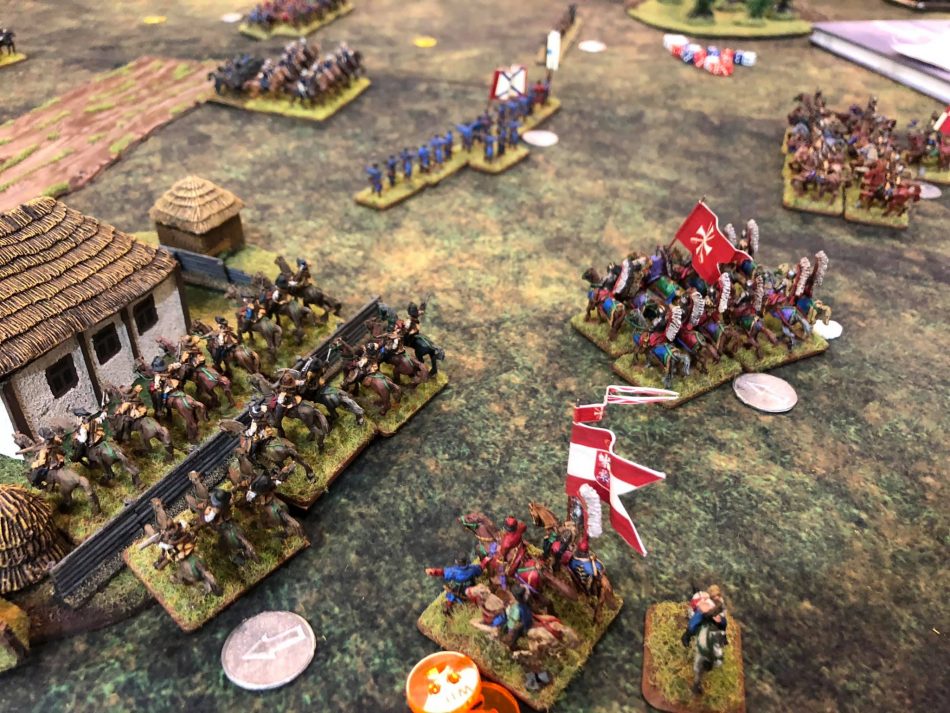
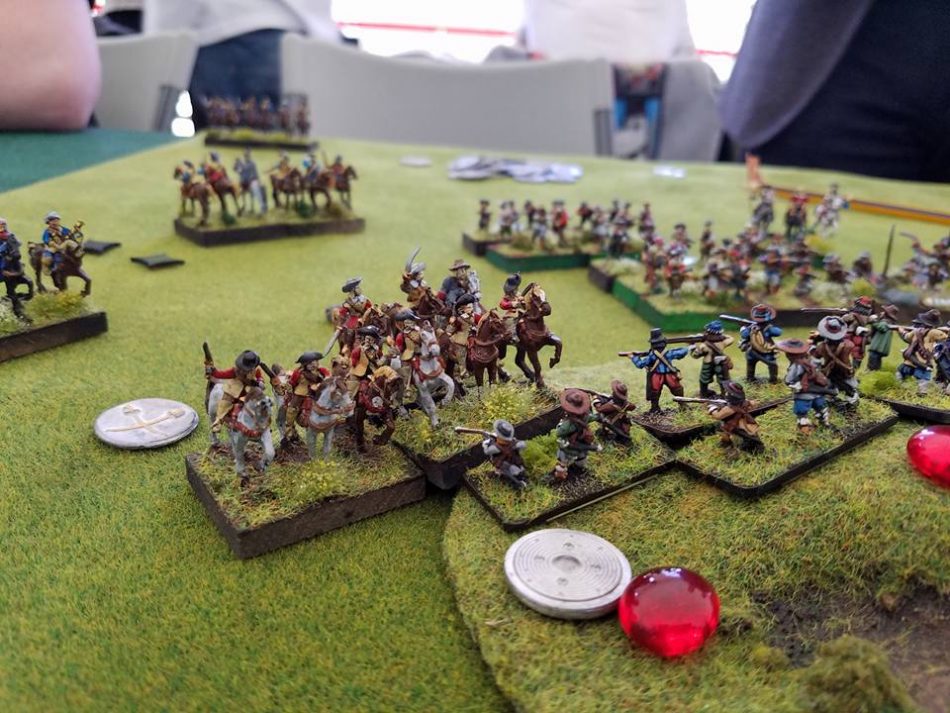
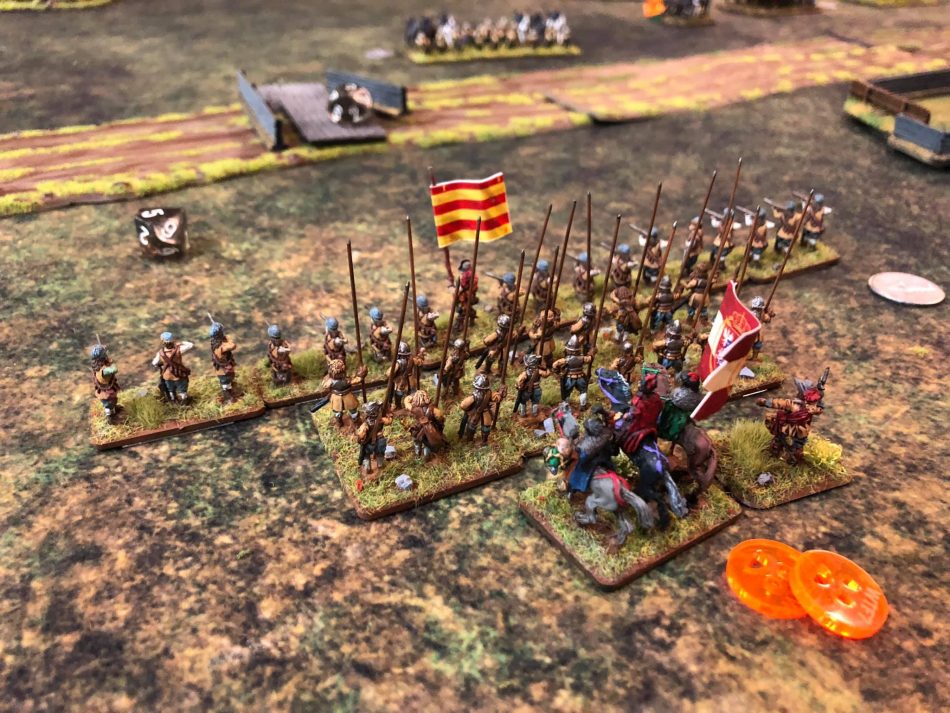
Uniformed ranks of infantry, bathed in smoke from musket salvos, with a forest of pikes swaying above them, this perhaps is the first image that comes to mind when one thinks of European warfare in the 17th century. Such an image is only partially true. In the vast areas of Central Europe, it was impossible to wage a military action without large numbers of reiters and dragoons. In addition, each army developed specific ways of fighting. When forced to be on the defensive, Danes employ active guerrilla warfare. In the armies of Brandenburg and Prussia, you will find numerous levy formations while in Imperial service, Croatian light cavalry fight alongside disciplined cuirassiers. The Swedish army consists of both domestic troops and experienced mercenaries from all over Europe. The army of the Polish-Lithuanian Commonwealth, with its excellent cavalry, combining the best features of Western and Eastern military, is truly unique. This book contains rules for the armies of the Polish-Lithuanian Commonwealth, the Kingdom of Sweden, the Kingdom of Denmark and Norway, the Electorate of Brandenburg and Prussia, and the Holy Roman Empire. Here you will find unit profiles, army lists and special rules for the afore mentioned factions. Inaddition, the manual also contains rules for mercenary troops, which are used by all armies of this region of Europe. All of this is accompanied by rich historical descriptions of herein presented armies and their components, as well as richly illustrated with pictures of actual miniatures provided by Wargamer.
The art of war of the eastern and southern parts of Europe is truly a feast for the seventeenth-century warfare enthusiast. Unlike the largely similar armies of Western Europe, each army of this region had a distinct character – not only in terms of particular types of units, uniforms, equipment, but also in tactics and organization. Modern ways of warfare intermingle here with military traditions dating back to the Middle Ages, creating a unique conglomerate.
Living on the Black Sea steppes, the Tatars rely on the maneuverability and mobility of their unparalleled light cavalry, showering enemies with a hail of arrows. The Cossacks, on the other hand, rely almost exclusively on their well-trained infantry, eager to use fortified wagons in defense. Transylvania’s main striking force is the hard-hitting charge of lance-armed cavalry, supported by light cavalry and infantry formations that vary greatly in dress, equipment, and method of recruitment. The two regional powers, the Ottoman Empire and the Tsardom of Muscovy, have in common the ability to fi eld huge armies, overwhelming the enemy with their numbers. Both states have access to a wide range of units capable of filling different roles on the battlefield. The Turks, however will seek to engage the enemy in close quarters and hope to break them with thundering charges and flanking maneuvers, while the Muscovites prefer to employ more cautious tactics and to exhaust the enemy.
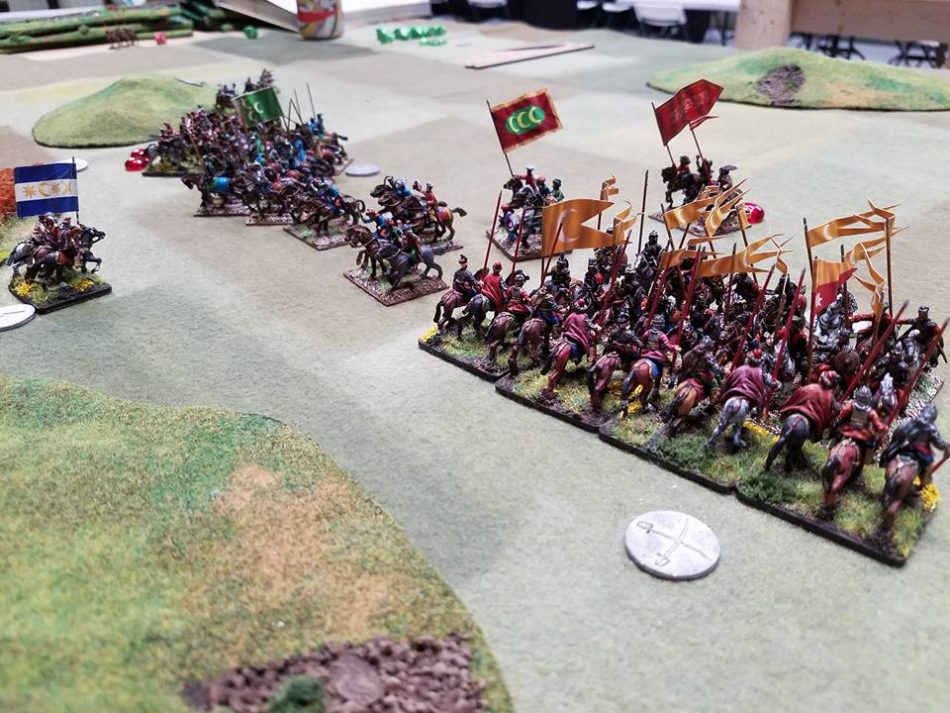
This book contains rules for the armies of the Ottoman Empire, the Principality of Transylvania, the Crimean Khanate, the Cossacks, and the Tsardom of Muscovy. Herein you will find unit profiles, Army Lists, and special rules for the aforementioned factions. All this is accompanied by rich historical descriptions of herein presented armies and their components, as well as richly illustrated with pictures of actual miniatures provided by Wargamer.
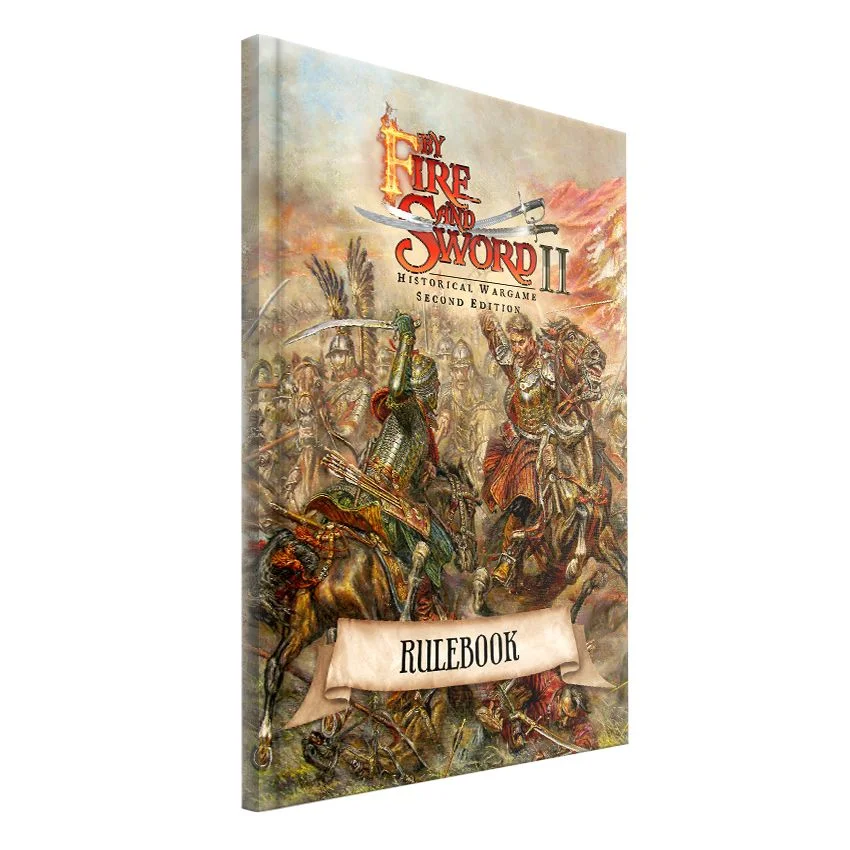
This manual will allow you to play By Fire and Sword. Within these pages one will find a range of varied and dynamic scenarios: from reconnaissance patrols and raids, to pitched battles and ambushes.
The scenarios are divided into two groups: Skirmish and Task Force, which determine the level of the game. In both Skirmish and Task Force sections,you will find appropriate rules for the selected level of play, hints on battle-field preparation, and a scenario package, as well as how to select them.
What is unique about the scenarios in By Fire and Sword is the possibility of playing games where one side has a significant advantage in the number and/or quality of troops. This book includes the system of selecting scenarios that are favorable to your army, as well as Random Effects and Stratagems, which allows one to offset your opponent’s advantage and fight on equal terms, even if your army is significantly weaker than your opponent’s.
The second solution offered in this book, unique in the wargaming world, is Reconnaissance. Before the game begins, players try to gain advantages by sending their Vanguard on reconnaissance. However, this should be carefully considered as the Vanguard can suffer heavy losses during Reconnaissance -optimal risk management is the key here. The book will guide you through the process of preparing for battle in an accessible, step-by-step manner, allowing you to quickly start gaming.
Rebellion: First phase of the Khmelnytsky Uprising (Spring–Summer 1648) is the first expansion for the second edition of the By Fire and Sword: a historical wargame. It takes us directly to the Wild Fields (Dzikie Pola), the eastern territories of the Commonwealth, engulfed in the flames of war.
Bohdan Khmelnytsky, the self-proclaimed Cossack hetman, incites a rebellion and stands shoulder to shoulder with his former mortal enemies, the Tatars, against the nobles of the Polish-Lithuanian Commonwealth.
The roar of musket fire, the clang of sabers, and the commands shouted by commanders echo throughout Ukraine.
To make matters worse, King Władysław IV dies just at the outbreak of the rebellion. Amidst the chaos, betrayals and humiliating defeats of the Polish army, only one man seems to be beacon of hope for a homeland deprived of its ruler. That man is Prince Jeremi Wiśniowiecki. Those who are ready to resist the enemies gather around him.
The rulebook will provide the reader with a background into the Cossack rebellion, its development and will allow you to play a campaign. Consisting of six historical scenarios, the rulebook will allow you to travel back to 1648 and decide the fate of the uprising in the battles of near Zhovti Vody, Korsun, and Kostiantyniv.
The Polish-Lithuanian Commonwealth, the Cossacks, and the Crimean Khanate receive new Army Lists, Units, and historical commanders: Jeremi Wiśniowiecki, Mikołaj Potocki, , Bohdan Khmelnytsky, Maksym Kryvonis, and Tugay bey.
Decide which side of the conflict you want to be on and march to wage the war on the Wild Fields!